
For a Total Wine holiday VIP event, the brief was wonderfully simple: Bourbon and Bubbly. Sixty VIPs. Heavy hors d’oeuvres. What could we make?
The good news: anything we wanted.
The bad news: also that.
Let me walk you through our thought process in putting together a menu for this sort of event.
We needed a blend of savory and sweet, warm and cold, since there would be no heating onsite, and light and heavy. The budget was modest, so keeping ingredient costs reasonable was key. But the people were important, so getting maximum WOW out of each dish was key too.
Most importantly, we didn’t want it to be any old spread. We wanted it to really make the party special, pair well with the featured drinks, and go beyond that by reflecting different facets of the beverages in clever, fun, or elegant ways.
Sure, we could put champagne and bourbon in some dishes and call it a night. We wanted to do better than that.
So we started by thinking about the defining characteristics of each drink.
Champagne is bubbly, fizzy, fun, elegant, golden. We love it with fruit: raspberry, black currant, orange, maybe apricot or honey. It’s French, so cheese is an obvious choice too.
Bourbon is richer, smooth, a little burn, a little wood, maybe a touch of smoke. It goes beautifully with chocolate, cream, pecans, fall fruits like apple, pear, and persimmon, figs, caramel, eggnog, beef, even pâté. And of course, it’s a classic part of an Old Fashioned, so that gives us orange peel, bitters, and amarena cherries too.
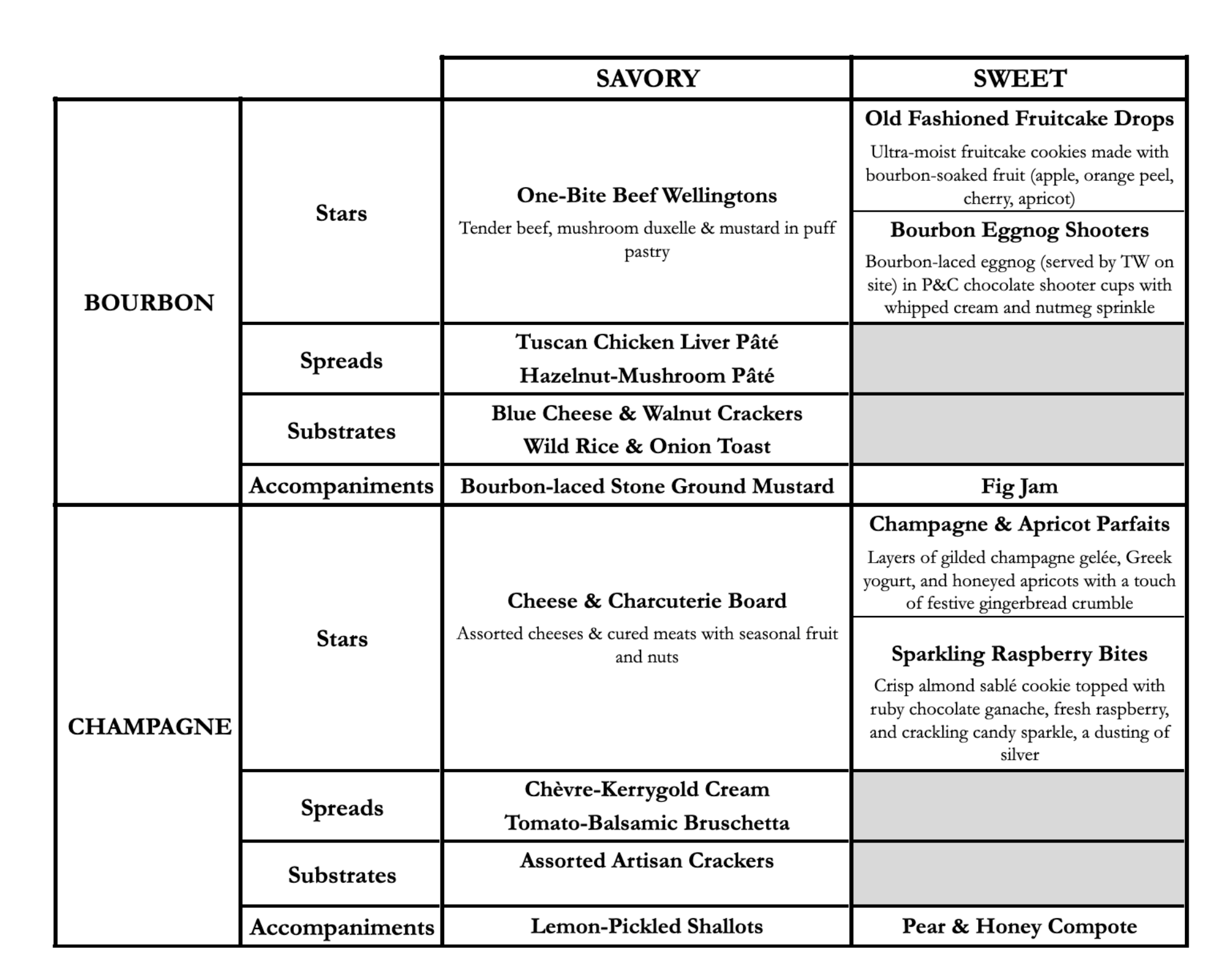
Once we had those two vocabularies, we gave them some structure. Each beverage needed a savory centerpiece, spreads and something to eat them on, a sweet and savory accompaniment, and two desserts. The desserts had one additional rule: they could not solve the beverage problem the same way twice.
Then we started filling in the boxes.
Then the menu had to become food
The grid gave us a way to make sure the menu was balanced, but it was never meant to be a matching exercise. Some dishes use the featured beverage directly. Others borrow its flavors, associations, or personality.
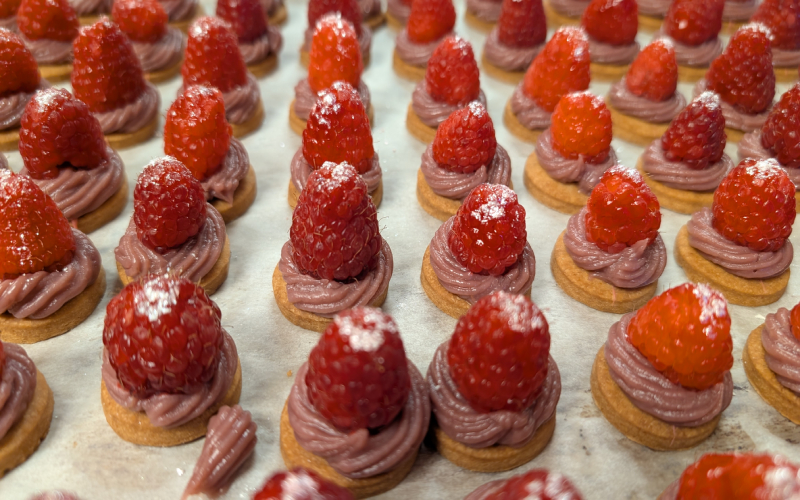
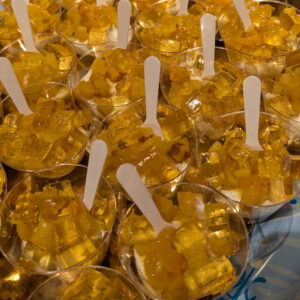
The two champagne desserts are a good example. In the parfait, champagne is literal: a gilded champagne gelée layered with Greek yogurt, honeyed apricots, and gingerbread crumble. The sparkling raspberry bite takes a completely different route. Raspberry and ruby chocolate feel right with sparkling wine, but the “bubbles” come from crackling candy embedded in tempered ruby chocolate. (We had to encase the crackling candy in real chocolate as a moisture barrier. Just using ganache would have made the rocks pop before they got to anybody’s mouth!)
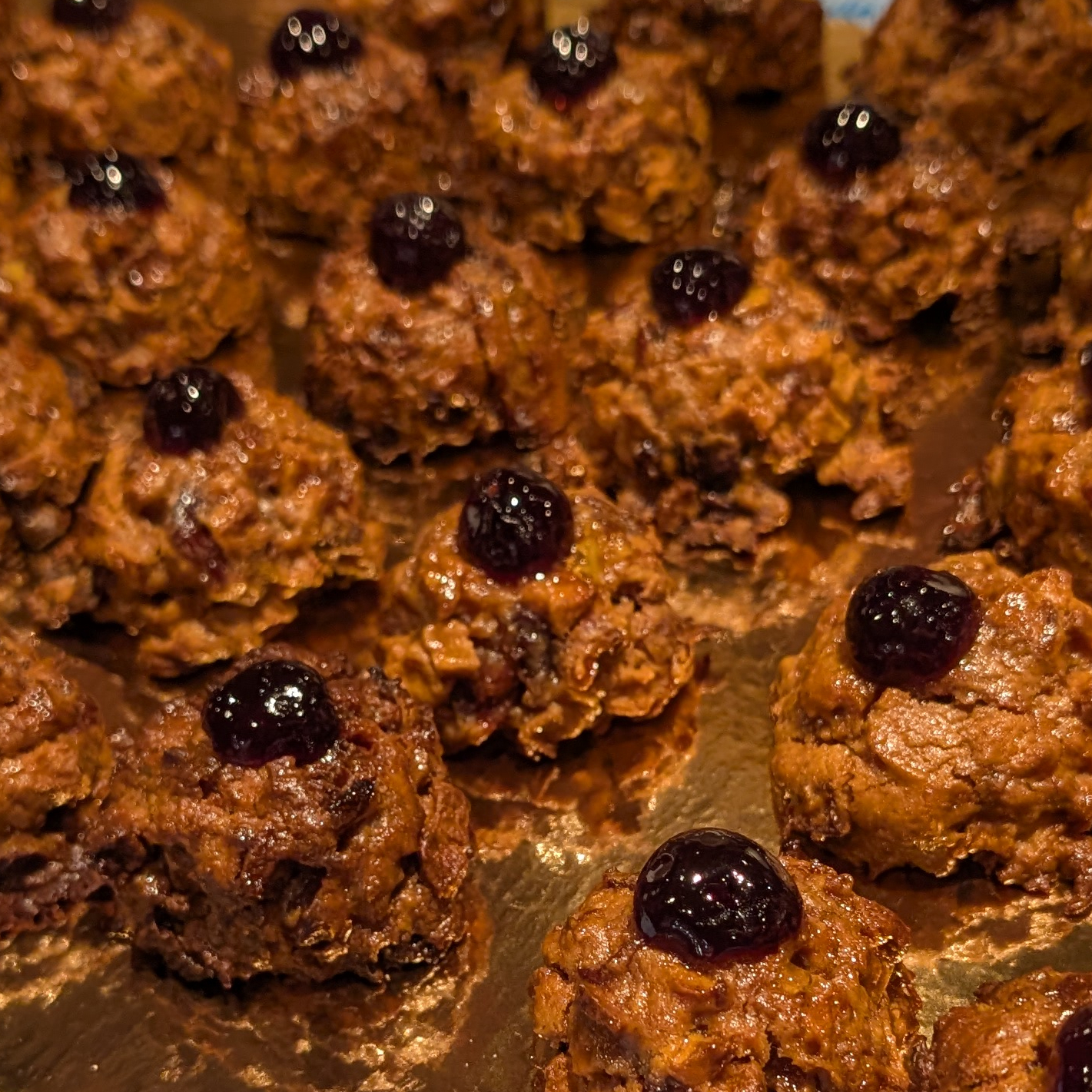
The bourbon desserts split the problem differently. Bourbon eggnog is exactly what it sounds like, but since only the TW crew could pour alcohol, the chocolate cups had to be transported empty, filled with boozy nog on site, then topped with whipped cream and nutmeg. The fruitcake drops started with a recipe for cookies we already make at Christmas, but for this batch, we swapped our usual rum-soaked fruit blend for orange peel and amarena cherry (for Old Fashioned vibes), plus bourbon-soaked apple and apricot (for body, moisture, and vague notions of Kentucky/Tennessee).
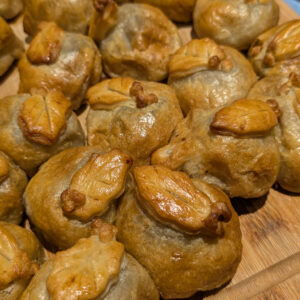
The savory side did not need bourbon or champagne poured into everything either. Beef, mushroom, mustard, and puff pastry already belong comfortably in bourbon’s neighborhood. Cheese and charcuterie need very little persuasion to sit beside champagne.
And then there were all the less glamorous questions that make the difference between a good idea and a good event. Could we make sixty of them without losing our minds (an open question during the Christmas bakery rush)? Would they travel? Would they hold? Did the whole spread have enough substance to count as heavy hors d’oeuvres? Were we spending money where the guests would notice it and saving it where they wouldn’t?
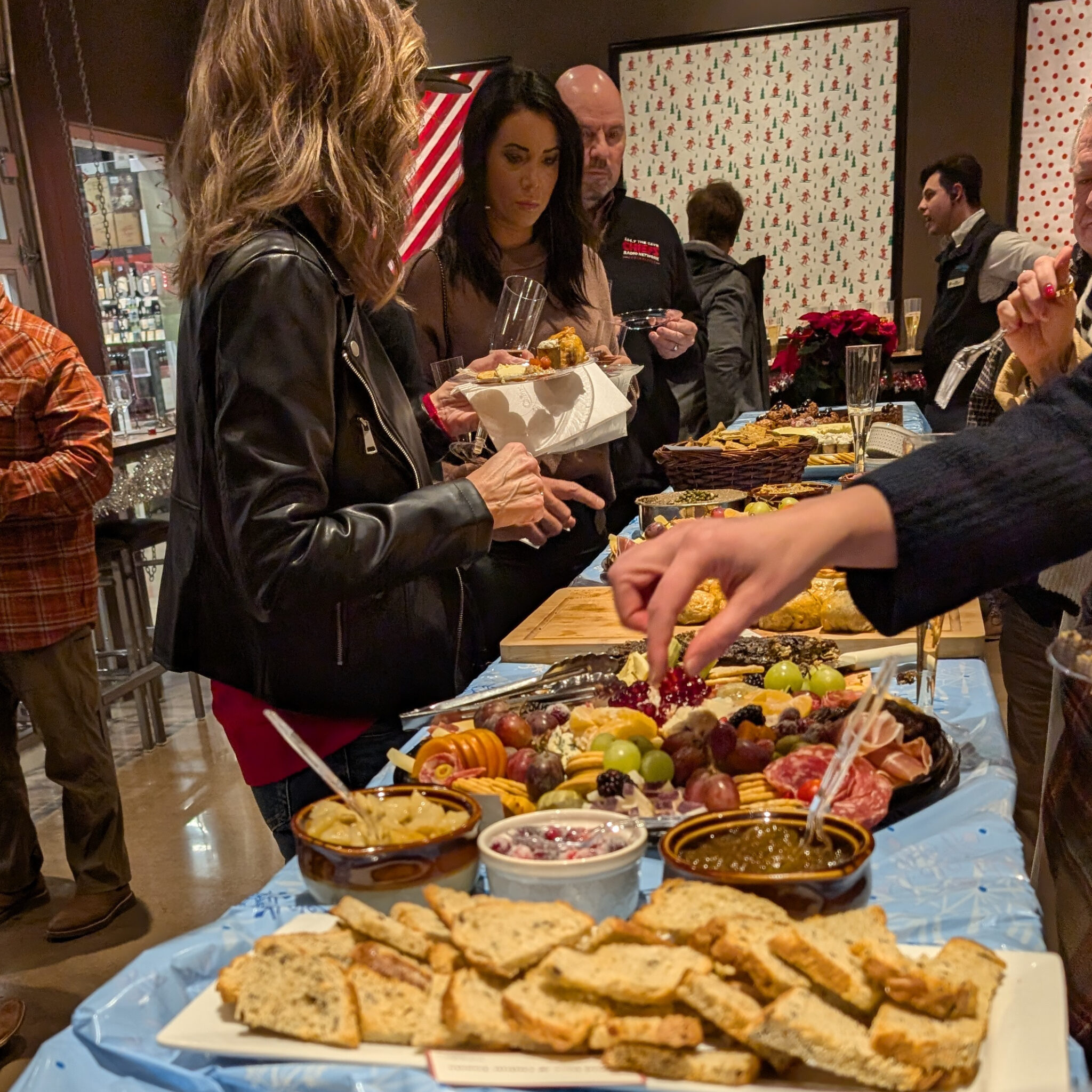
As it turned out, it went better than we could have dreamed. People raved about the food and bought lots of wonderful bottles, which of course pleased our hosts. It also gave us a chance to talk about our upcoming class lineup with a room full of people who appreciate good food and good beverages.
More importantly, it exceeded expectations in both directions. Total Wine had trusted us with a fairly open brief and a modest budget, and we gave them something that felt far more lavish than either of those facts would suggest. Their guests were expecting a holiday appreciation event. They got a table full of things that felt considered, abundant, and a little surprising.
That reflected well on us, certainly. But it also reflected well on our hosts. The food made the evening feel generous.
There was plenty for everyone, with enough left over to generously stock the employee fridge for the next day.
Nobody at the party needed to know there had ever been a grid, or a moisture-barrier problem, or a question about how to transport sixty empty chocolate cups. That part was for us.
They just got to have a really good party.