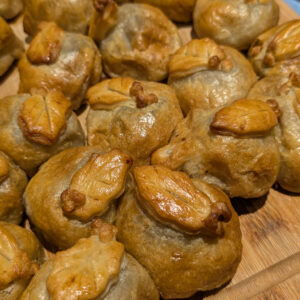
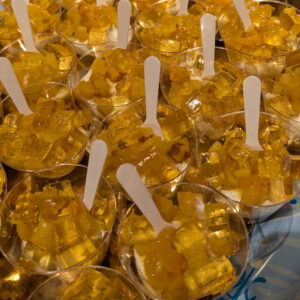
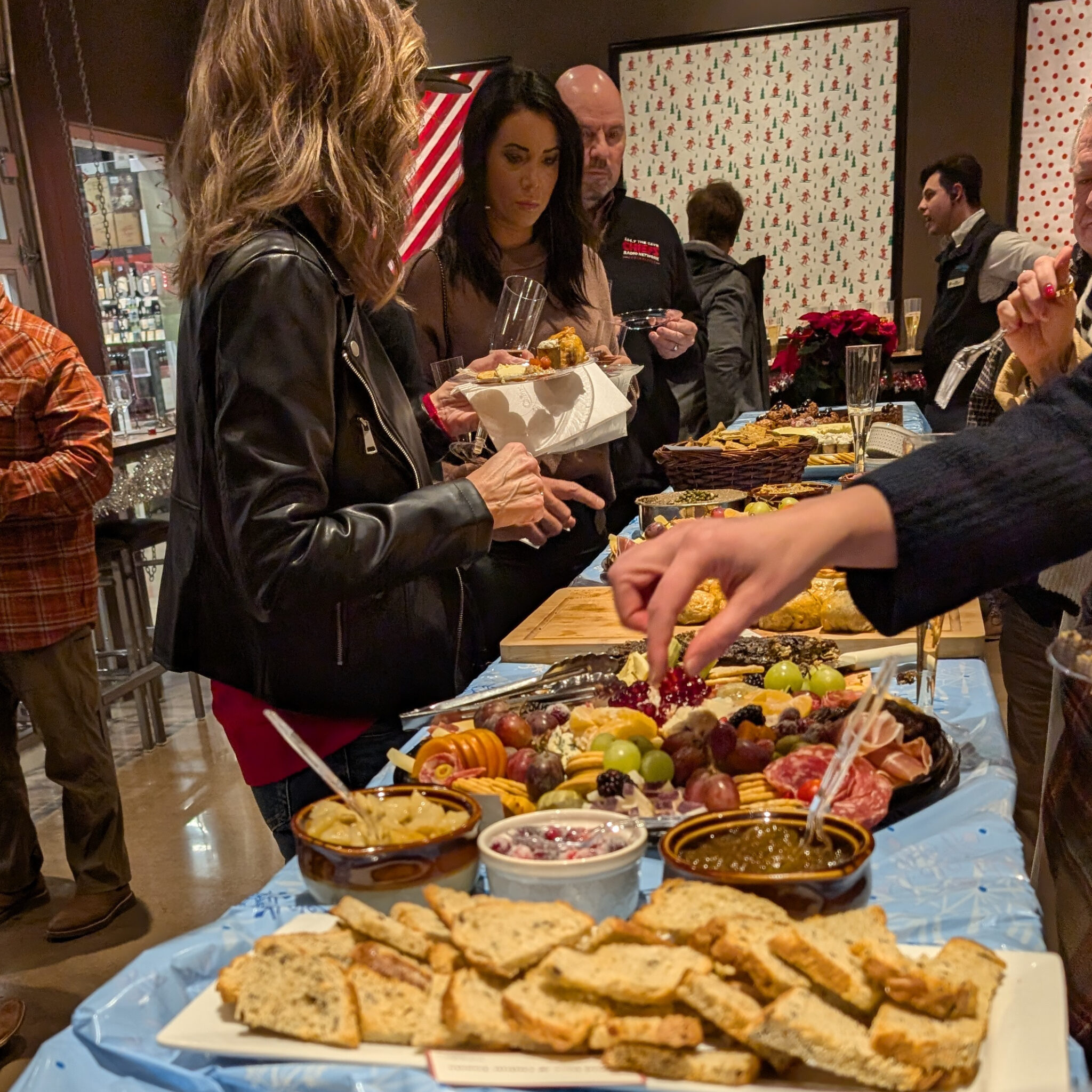
Ozarks Lyric Opera asked us to create a multi-course Istrian dinner for A Foreign Affair, an intimate evening featuring superstar tenor Michael Spyres. We had done a variety of menus for past versions of this event in previous years. Beer-braised brats, pretzel balls, and hand-stretched apfelstrudel for the German iteration; smoked trout deviled eggs, sumac and elderberry jello, pork belly with pickled chanterelles, pawpaw sorbet for the native Ozarks-themed version, that sort of thing.
This was a slightly different kind of problem.
For starters:
- where the hell is Istria,
- what do they eat there,
- and can I get it legally and in sufficient quantities to make dinner for 90?
As it turns out:
- at the intersection of Italy, Slovenia, and Croatia;
- fresh black truffles, wild-harvested asparagus, and Boškarin (a very specific, very rare sort of Istrian ox);
- and no, no you cannot.
Istrian food is unusually attached to place. Its ingredients, climate, languages, borders, and history are not incidental details. They are inextricably linked to the food.
And we were immutably, relentlessly in Missouri.
In October.
Not exactly wild asparagus season. Or ox season (?) Probably.
I will admit, I spent the next few weeks sitting down to draft a menu, despairing, devolving into indignant muttering about tenors/geography/oxen, and giving up and moving on to more attainable matters like, idk, world peace. Cold fusion. Self-pairing socks.
But eventually, menus had to be printed, so I had to come up with something.
Alright. What do we know?
We know that Istria sits at a crossroads, and its food shows it. Italian, Croatian, Slovenian, Austrian, Venetian, and broader Central European influences have all left fingerprints there. Borders moved. Empires came and went. People, ingredients, techniques, and languages crossed back and forth.
That, at least, we could work with.
We could not get the ox. We could not summon October wild asparagus from the Adriatic coast. And I was not interested in finding some vaguely truffle-adjacent mushroom and pretending we had solved the problem.
But some things do travel beautifully, and we already had them or knew where to get them. We could follow relationships among dishes rather than insist on literal reproduction. We could do the best with what we had in our environment, which is, after all, in the spirit of most traditional cooking anywhere.
Once I stopped asking, “How do I make Istria in Missouri?” and started asking, “What parts of Istria can actually get here intact?” the menu finally began to move and my despair transformed to excitement.
We could get wonderful Italian corona beans, DOP pecorino, fresh arugula, canned chestnut purée (I think ours was French, but I was not prepared to stickle on that point), and other ingredients that belonged naturally inside those overlapping traditions. We make vats of our own candied orange peel, and that fit in. The last few figs of the season were mercifully still available at the grocery store. Costco has pork belly, and so does Istria.
Thank God.
The First Plate
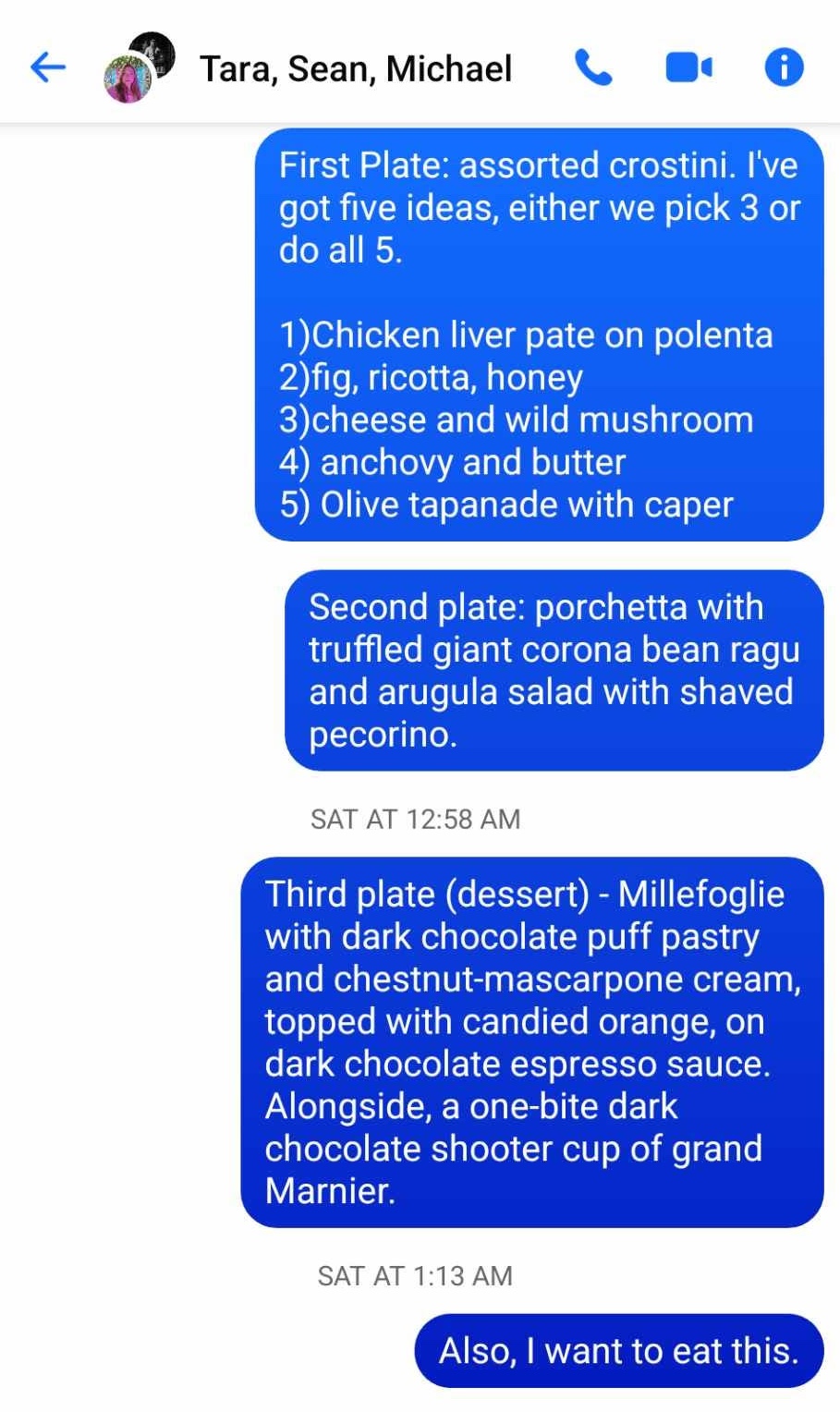
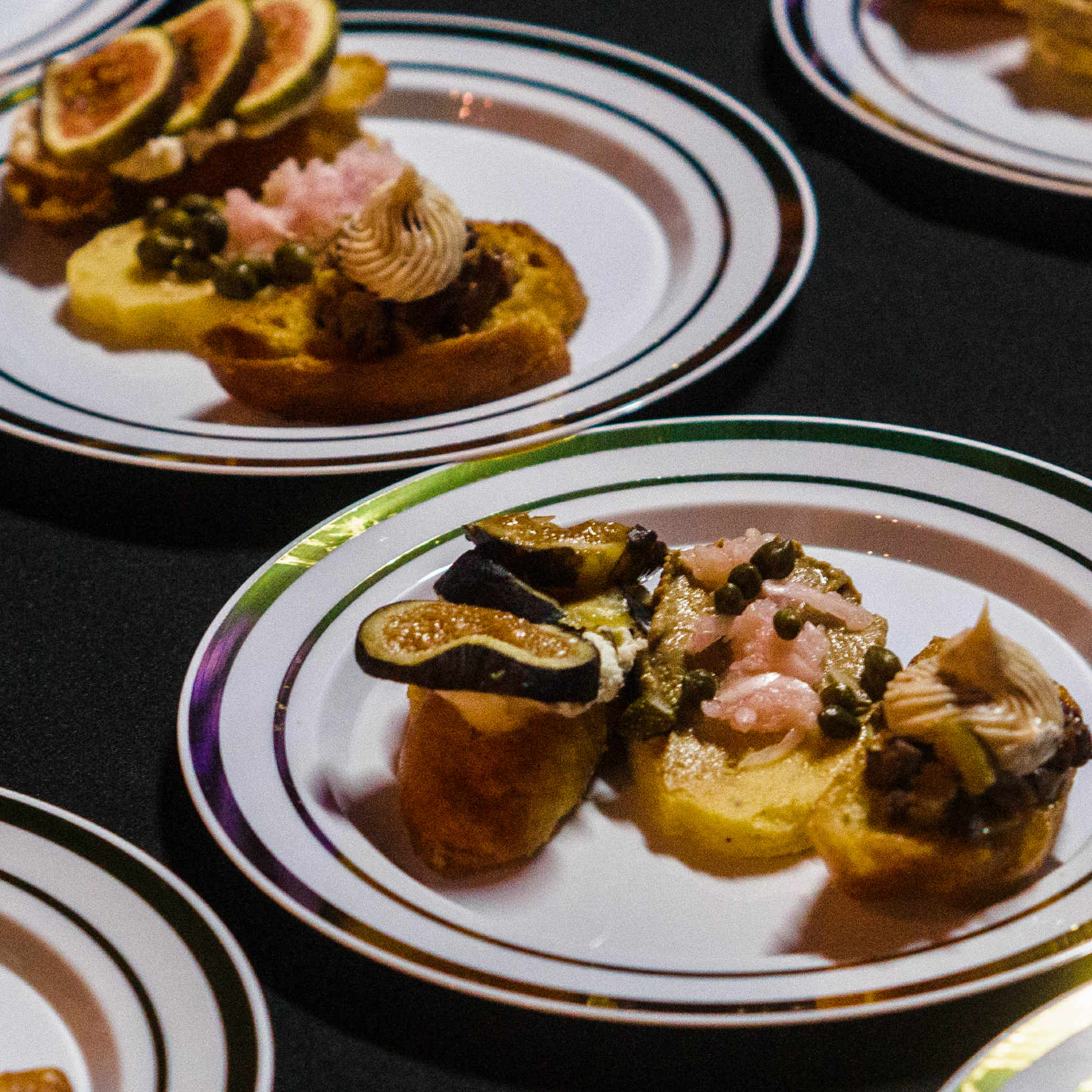
I pitched five crostini, and we chose three: chicken liver pâté on polenta, fig with ricotta and honey, and olive tapenade, which picked up a little swirl of anchovy butter on top.
That also gave us some useful flexibility. For anyone eating gluten-free, all three could go on polenta instead of bread. If we needed to accommodate someone avoiding dairy for alpha-gal reasons, we could adjust the fig bite accordingly.
Plate one, solved.
THE SECOND PLATE
Next up, the main course. In previous years, A Foreign Affair had been served as three small plates, but for reasons of time of day, table size, and ticket price, the decision was made to scale the main course up to a full-size plate.
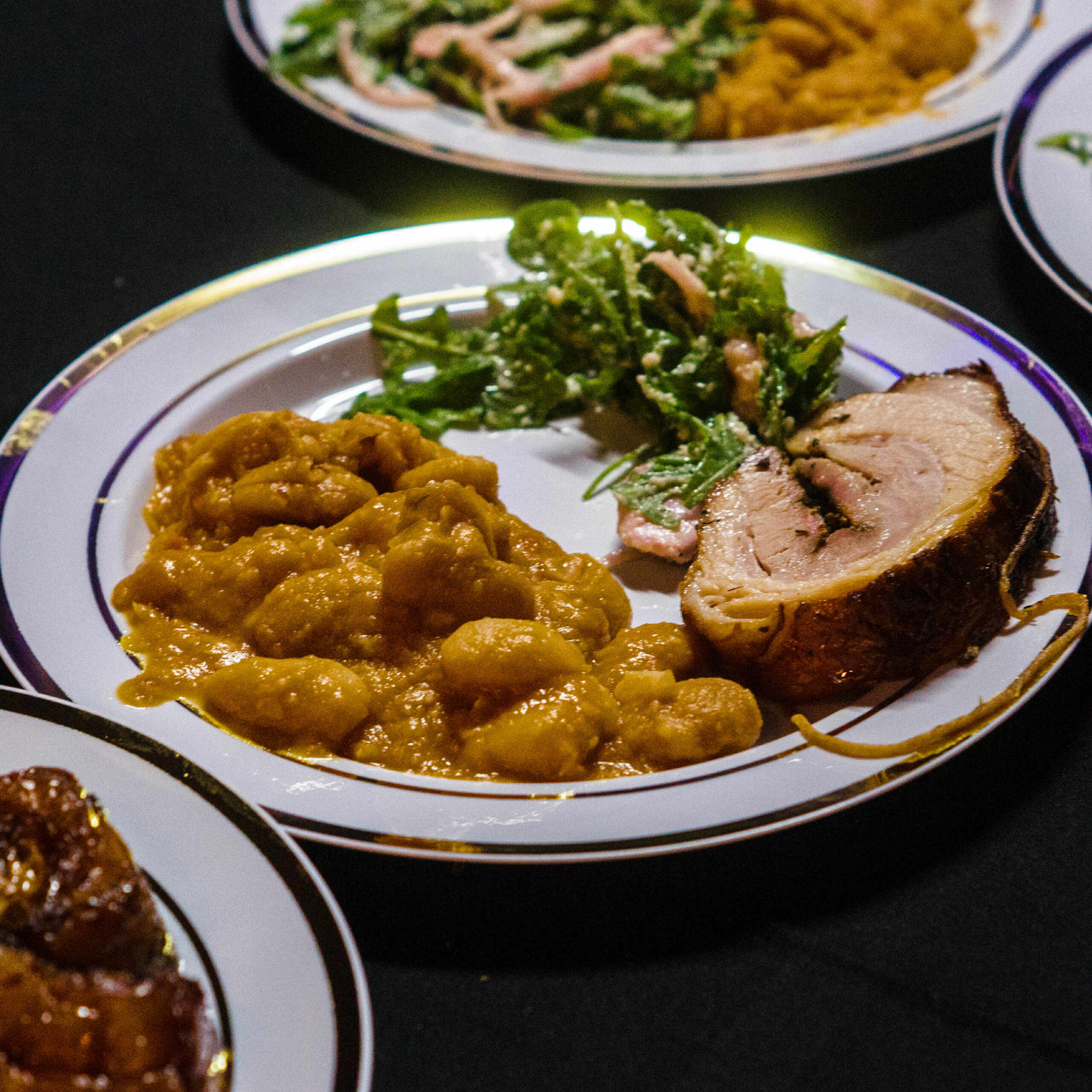
The star of that plate, of course, was going to be the aforementioned pork belly, rubbed with herbs, rolled up and tied with twine, then sous vided ahead of time to silky, porky perfection. Once chilled, we could slice it cleanly, which is, in my opinion, the only sensible way to slice pork belly.
Right before we left for the event, we’d roast it in a hot, hot oven to crisp the skin, cut the portions, and head for the theatre, about a 5 minute drive away.
The rest of the plate came from ingredients we could actually get our hands on: giant corona beans, pressure cooked to unreal creamy perfection, then folded into a housemade ragù laced with a touch of truffle oil. Vegan, filling, and borderline addictive. And behold, we have acknowledged the truffle!
Then, for some color and freshness, baby arugula, a mountain of shaved pecorino, and my favorite salad ingredient: lemon-pickled shallots. For the dressing, the bright pink, shallot-y lemon juice whisked with some good Italian olive oil.
Rich pork, creamy beans, spicy greens, salty cheese, tangy lemon.
Maybe not perfectly authentic, but certainly in keeping with the spirit of the peninsula of honor.
Plate two, check!
The Third Plate
One more plate to go. Dessert, mercifully. My home turf.
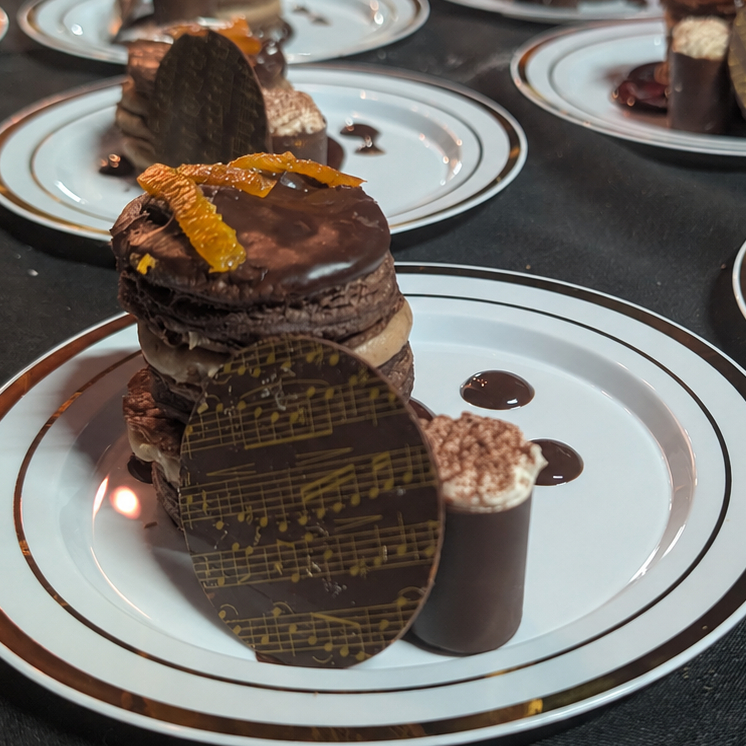
We went with a millefoglie, which gave us an elegant, portable Italian framework to start from, but then made it rich and dark and glorious. Dark chocolate puff pastry, chestnut-mascarpone cream, candied orange peel from our own enormous stash, and a dark chocolate-espresso sauce. Sounds good, I’ll take six. For quality control, obviously.
The chestnuts were surprisingly easy. They belong comfortably in Istria and throughout that whole Central European/Italian neighborhood, and canned chestnut purée is one of those miraculous ingredients that can cross an ocean without becoming a sad imitation of itself. Mascarpone is readily available, even if correct pronunciation is harder to come by around here. Candied orange peels gave us bitterness, perfume, and color, and also gave me an excuse to use something we already had in the pantry.
And then there was the little chocolate cup of Grand Marnier.
Is Grand Marnier Istrian? Absolutely not. Had I finally recovered from my earlier insistence that every molecule on the plate be Authentically Adriatic? Apparently. And look, surely somebody in Istria made brandy with the wine, and then added orange to that brandy? Right? Allow me my fantasies and justifications, please.
What it did belong to was the dessert: dark chocolate, orange, coffee, chestnut, cream. One tiny cream-topped shot alongside the millefoglie pulled the whole thing together and made the plate feel like an occasion rather than simply the last course.
Oh, and one more thing. A medallion of dark chocolate, printed with sheet music. If one is going to collaborate with one of the world’s greatest opera singers, one must never forget that the point of the whole endeavor is the music.
Dessert course solved, and then some. Three courses of cuisine that was, on the face, impossible but in the end, turned out to be a perfect celebration of place, of food, and of music.
The Experience is the Point
At some point in developing a menu like this, authenticity stops meaning “Can I reproduce exactly what somebody would eat in Istria?” We had already established that the answer was no, unless somebody could arrange an emergency airlift of truffles, asparagus, and one highly endangered ox.
The better question was whether the food made sense. Did the ingredients have honest relationships to the place? Did the courses make sense together? Did it feel generous enough for the occasion? Did it go with the music and the space and the feel of the room. And, importantly, did we actually want to eat it?
And in the end, the answer to that last question was emphatically yes.
Bravo, everyone.