
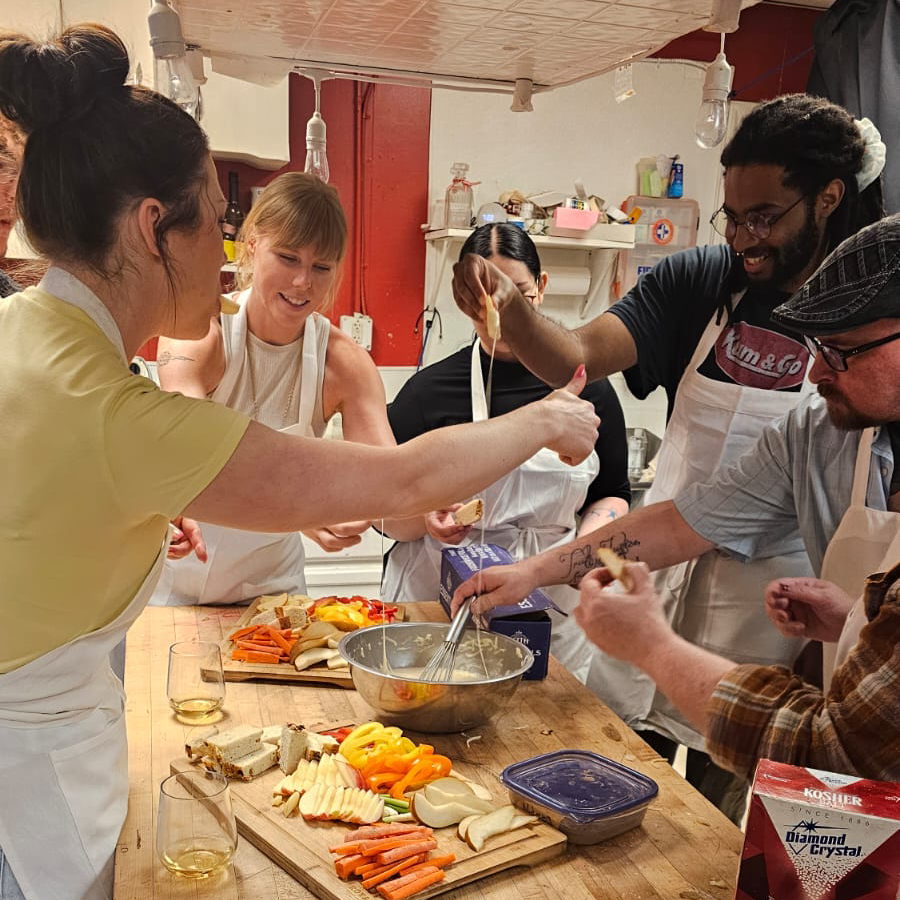
Culinary programs built around what makes your project distinctive
Pickwick & Cherry collaborates with producers, trade and tourism organizations, cultural institutions, retailers, universities, media, businesses, performers, and event organizers to create culinary programs with a point of view.
We are culinary educators, researchers, storytellers, performers, and unusually versatile makers of things. We create projects that help people taste, understand, use, remember, or care about a product, place, tradition, story, or idea.
Bring us the audience, occasion, ingredient, setting, problem, opportunity, or gloriously specific constraint. We will help determine what the food should mean there.
Where Collaboration Can Lead
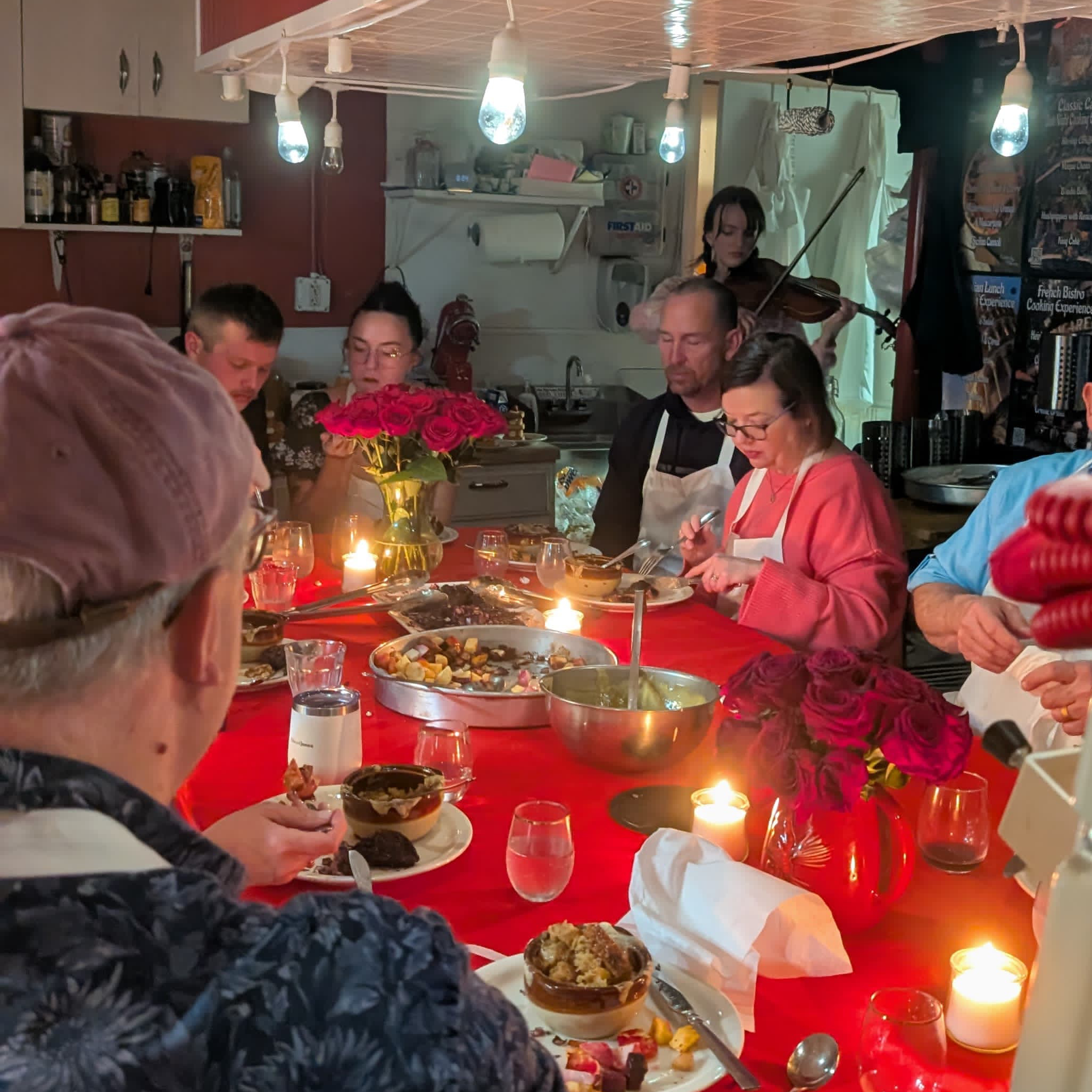
Events in Our Kitchen
Reserve our entire teaching kitchen for a hands-on cooking, baking, or tasting experience for up to ten guests, with limited capacity for two additional people. Choose from more than 70 established Pickwick & Cherry programs, with transparent flat-rate pricing.
Events On-Location
Custom culinary programming for events whose audience, purpose, profile, or setting calls for us to come to you. On-location work may include tastings, demonstrations, appearances, product education, cultural programs, food-and-music experiences, executive or donor events, and highly tailored private gatherings.
Products, Ideas & Other Interesting Problems
Not every collaboration needs to be an event. We can help research, test, explain, translate, demonstrate, develop uses for, or create programming around whatever your thing is, be it an ingredient, product, place, tradition, or idea.
We create public-facing culinary experiences around countries, regions, ingredients, techniques, histories, journeys, music, and the occasional idea that resists categorization.
That may become a recipe, class, tasting, presentation, product trial, consumer-learning project, piece of educational content, live program, or something that does not yet have a useful name. You do not need to know what form it should take before you bring it to us. Finding that is part of the work.
If the form is already clear, we heartily congratulate you. (At least one of us should live in delicious certainty!) In that case, we can still help make it happen, make it better, or make your events around it more fun, interesting, or memorable.
Collaboration is the work
Alongside sixteen years of professional baking experience and over a thousand classes and culinary experiences taught, Pickwick & Cherry founder Katie Kring also holds an MFA in Musical Theatre Writing from NYU’s Tisch School of the Arts.
That may look unrelated to her work with food. It is not. The NYU Graduate Musical Theatre Writing Program teaches the crafts of musical theatre and opera writing, of course, but more fundamentally, it teaches collaboration: how to make something with other people.
Live musical theatre and opera is built by writers, directors, performers, designers, music directors, orchestrators, producers, technicians, marketers, box office staff, and audiences. Each knows something the others do not. Katie has worked across creative, technical, production, backstage, and audience-facing roles. She can make a whole work by herself. She would still rather have the collaborator than all the credit.
That preference has become part of Pickwick & Cherry’s operating system. Collaboration is not the polite handoff between your idea and our execution. We want your knowledge, your unanswered questions, the peculiar constraints, the inconvenient truths, and the thing somebody has noticed that everyone else has missed. We bring our own ideas and expertise, but we do not presume that all useful knowledge belongs to us.
Start with the version that would be impossible.
We like the part with the question mark
We assume that if the solution were simple and obvious, you probably would not need us, except maybe to create a stellar event at our kitchen or in the location of your choosing.
But here, in the liminal harder-to-name space, we are most useful when something important is not yet settled: the idea is interesting but not fully formed; the ordinary solution misses the point; a peculiar constraint changes the possibilities; or everyone can see the empty space but nobody yet knows what belongs there.
We begin with questions. Why this product? Why this food? Why this audience? Why here? Why tonight? What would happen if we turned the premise around, used the apparent limitation, connected it to something unexpected, or did not do the obvious thing at all? Who would love this if they knew it existed? How do we change that?
We do not begin by negotiating ourselves down to the constraints of reality.
First we ask what the fullest, strangest, most impossible, most exciting version of the idea wants to be, before the room, budget, deadline, available ingredients, and laws of physics begin objecting. Then we identify what is essential and translate that into the world we actually have.
Reality gets a vote. It just does not always get the first one.
Some ideas need room to become impossible before they can become achievable. Others need to be taken apart until we find the living heart at the center. Often, the first step toward the best idea is an idea considerably worse. Around here, we call that game “Well, That’s Already More Interesting.”
Sometimes the answer is a menu. Sometimes it is a class, tasting, product trial, focus group, performance, story, demonstration, introduction, or a much better question. Sometimes the metaphorical door opens. Sometimes there was never a door there, and we find somewhere else to go.
What We Bring To The Table
Attention
We give complicated questions actual attention and apply the hunger of curiosity to read, taste, listen, ask, research, and test ideas we may have never considered before.
We will also tell you what we find. If we dislike a product or think an idea has a problem, we will say so, and will work to identify what might change our minds, what resistance you may encounter, why something may be a hard sell, or whether the problem lies elsewhere. It could be product, the story, the format, the price, the audience, or that it’s simply not for us.
Everything we learn, we use to help the work get better, and we firmly believe that the best idea wins, no matter whose idea it was in the first place.
Range
Both individually and collectively, we know a great deal about food, baking, ingredients, history, culture, languages, education, storytelling, performance, production, business, a tremendous number of other seemingly unrelated things, and the strange routes somehow connecting them all together.
Our team includes serious food people, performers, musicians, teachers, theatre kids, travelers, and makers.
We do not know everything about your particular thing yet. That is different from arriving empty-handed. We bring a large and unusually varied store of knowledge, with room for yours.
Craft
We make things. Literally. On most days, somebody here has dough on their hands, chocolate on their apron, three timers running, or an experiment in the sous vide.
We research and imagine, but we also mix, shape, bake, taste, teach, pack, transport, plate, reset, and wash the dishes. We understand ingredients, technique, timing, scale, production, instruction, and the practical difference between something that sounds wonderful in a deck and something that actually works in a person’s hands, on a plate, or in a room.
A concept eventually has to survive contact with heat, gravity, available equipment, human attention spans, and the clock. We know how to help it do that.
We will happily follow an idea down the rabbit hole. We will also attempt to come back with dinner.
Presence
A good idea still needs life when it meets a room, and that’s where our experience as performers comes in. We know how to hold attention, read an audience, explain complicated things without flattening them, recover when something unexpected happens, and make people want to participate.
We are professionals, comedians and teachers as well as food people. We can be polished, funny, conversational, improvisational, ceremonial, or gloriously strange, depending on what the moment requires. Often, several of those at the same time.
Connection
We connect ideas to other ideas, products to stories, and people to people.
Our wide and occasionally improbable network includes cooks, bakers, musicians, performers, educators, producers, institutions, makers, and otherwise fascinating humans in many parts of the world.
We do not assume every useful person needs to work for us. If a project needs a skill, perspective, performer, or collaborator we do not have, there is a reasonable chance we know someone who does.
Until It Opens
Sometimes we describe ourselves, a little self-deprecatingly, as “three raccoons in a trench coat pretending to be a real whatever.” But permit us a brief homage to raccoons. The reason raccoons are so good at getting into trash cans, attics, and Predicaments is that they keep trying until it opens.
We do not confuse persistence with denial. If we conclude that something really is futile, we will tell you as soon as we know and save everyone time and money. But if we believe there is a feasible way in and simply have not found it yet, we will keep testing, adjusting, asking, and trying until it opens.
We Are The People Who Talk To The People
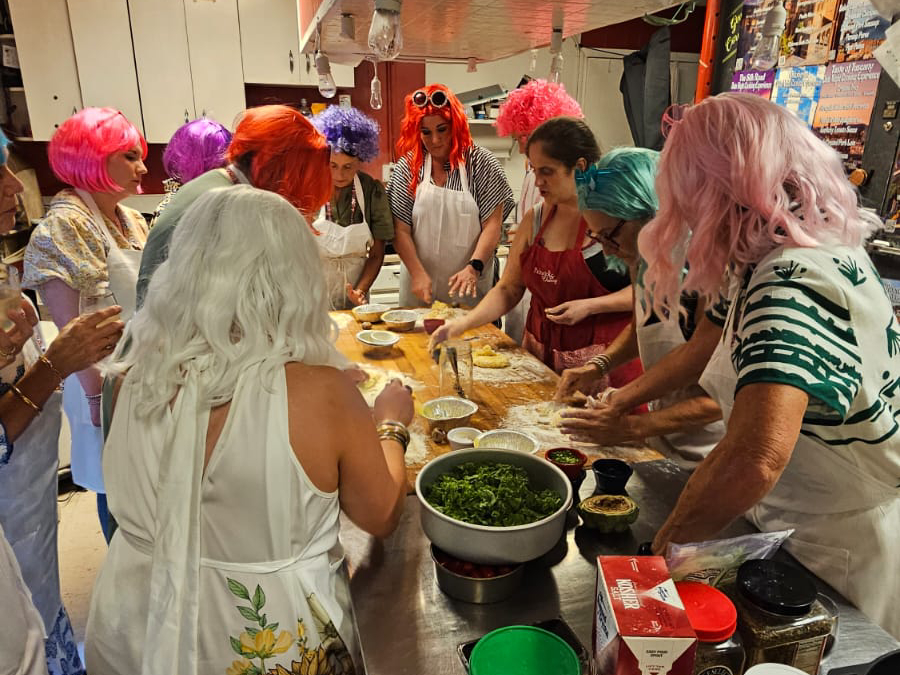
We Learn by Cooking Together
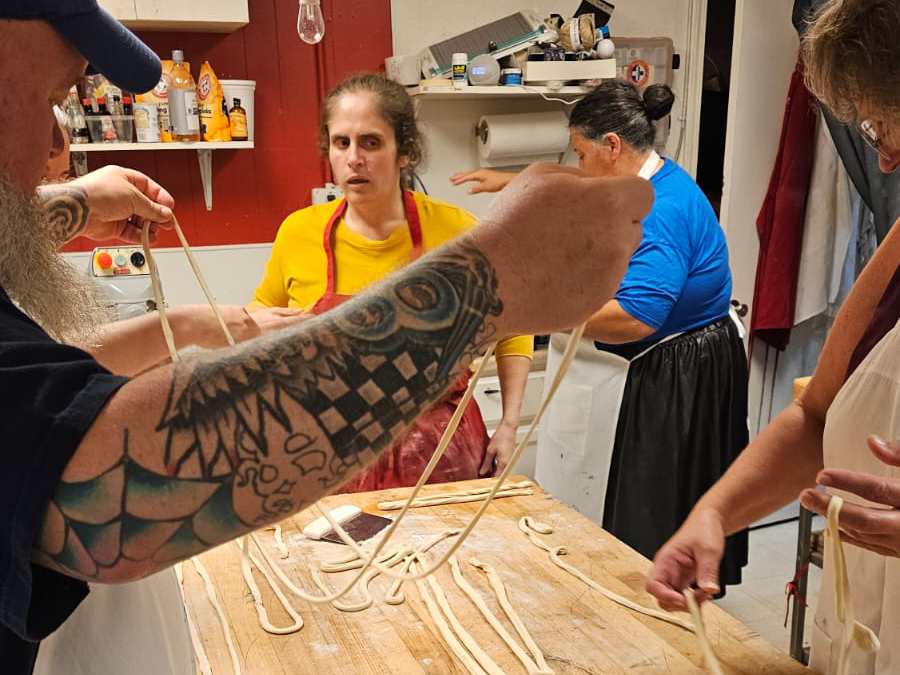
We spend more time than we’d bet almost anybody does cooking alongside Americans of all different stripes. We are not observing them from behind one-way glass. We are chopping, kneading, tasting, teaching, answering questions, clearing plates, and listening to what they say to one another. We know what feels safe and familiar, what’s pushing it, what comes back on the plate, and what never makes it into the leftover containers.
We have more than a decade of experience and thousands of encounters in the kitchen. We see where guests hesitate, what they understand, what they ignore, what they want twice, and what they discuss all the way home. If you want to know what we know, we’re happy to tell you. If you want to know what we don’t yet know, we’re fascinated to find out.
We cannot make an audience love or understand a product, place, or idea. We can introduce it thoughtfully, watch what happens, and help determine why it connects—or doesn’t—and what might make it more useful, approachable, interesting, or memorable.
A World Kitchen, in the Heart of America
Pickwick & Cherry is a ten-seat teaching kitchen in Springfield, Missouri, with an experienced team, an active calendar, and a constantly changing repertoire of original programs. We do not teach the same proven menu every night. Our current twelve-month calendar includes more than 65 distinct class and experience concepts across nearly 300 scheduled event dates, and guests fill more than 3,000 places in our public and private programs each year.
International programming is not a decorative corner of that calendar. In our most recent completed program year, more than 60 percent of website-paid places and ticket revenue came from explicitly international or multi-country programs. That is a conservative definition: it does not include technique classes such as croissants, choux, pasta, phyllo, and pretzels, even when their cultural origins are central to what we teach.
Springfield does not speak for every American, and we would never pretend that it does. It is, however, a real American city filled with real customers spending their own money. It gives us a place where an unfamiliar idea can meet an actual public, at a scale where learning is practical and direct.

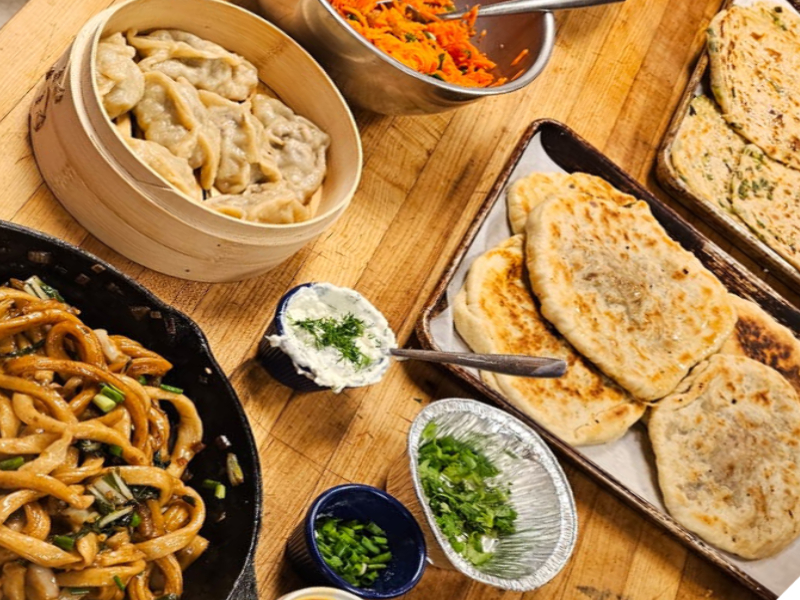
An Audience Willing to Go Somewhere New
Our audience includes first-time guests and a meaningful core of regulars willing to follow us somewhere new. Familiar cuisines and formats often welcome new purchasers, and we love those menus as ways to bring new faces in the door.
Less familiar ingredients, places, formats, and combinations frequently begin with established guests, who give us an unusually adventurous first audience. Of our repeat purchasers, more than half have crossed between program formats, and one in ten has purchased programs drawing from at least three different countries or regions.
This creates a highly motivating demand for novelty and gives us a place to discover which new ideas deserve to keep going. What comes next is shaped by whatever has caught our attention: something we tried, read, wondered about, or traveled somewhere to eat and could not stop thinking about. Then everyone has to know about it.
We trust the judgment of some of our regulars deeply. If the Newmans, who have taken nearly everything we offer, are not interested in an idea, that may be a useful sign that it is not the right idea, or that we have not yet found the right way to present it. Their enthusiasm, hesitation, and questions help us decide what deserves further attention. Some ideas are revised, some are abandoned, and some move outward toward a broader public.
A constraint is not the end of the idea. It is where the interesting part usually starts.
Some Illustrative Examples
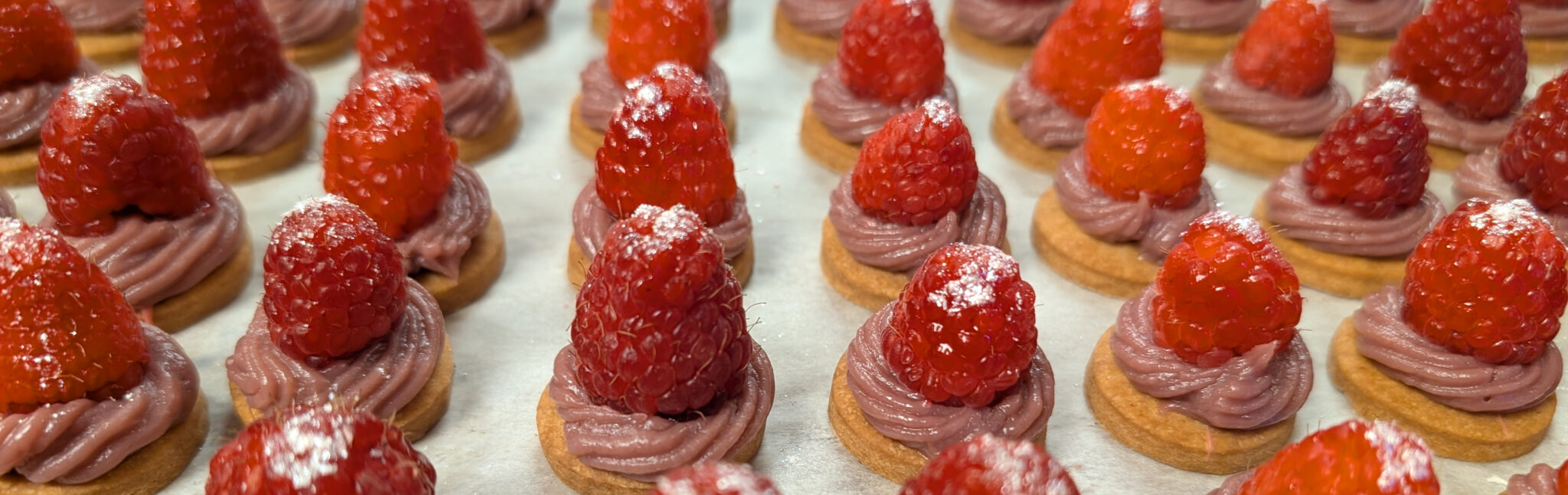
Bourbon & Bubbly: A VIP Christmas Event
For a Total Wine holiday VIP event, the brief was wonderfully small: bourbon and bubbly. Sixty VIPs, heavy hors d’oeuvres. What do we make?
The good news: anything we wanted.
The bad news: also that.
Let us walk you through our thought process in putting together a menu for this sort of event. Read More
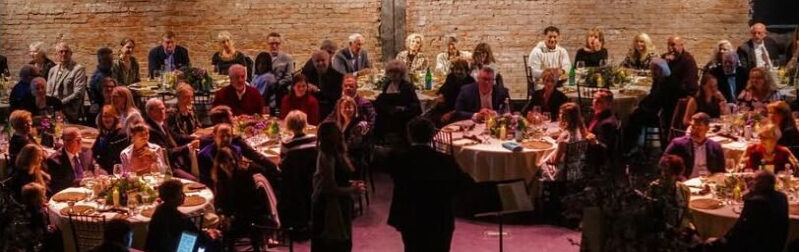
Istria & Opera: An Ingredient Sourcing Odyssey
Ozarks Lyric Opera asked us to create a multi-course Istrian dinner for A Foreign Affair, an intimate evening featuring superstar tenor Michael Spyres.
There was just one problem.
Where the hell is Istria, what do they eat there, and can we source it in Missouri?
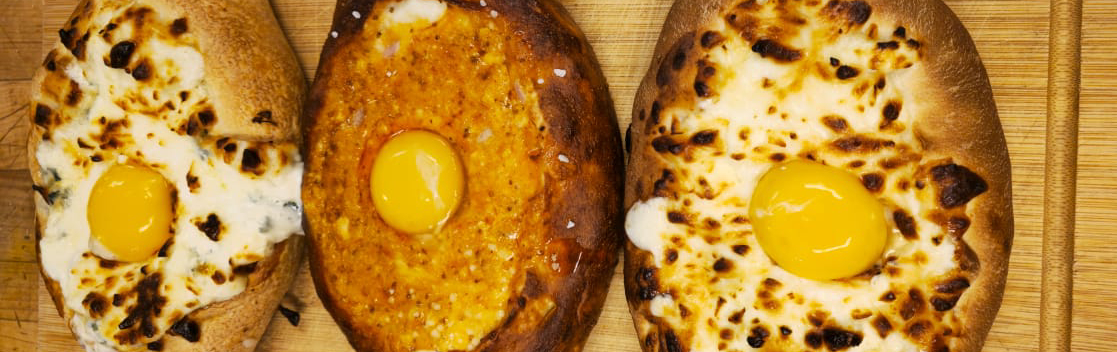
KHACHAPURI FINDS AN AUDIENCE
We’ve been obsessed with Georgian food in general and khachapuri in particular (the cheesy bread boats that serve as Georgia’s national dish) for a while now.
But, outside of our Georgian Supra Date Night, we didn’t have nearly enough outlets to feed them to people.
Enter: the Pickwick Street Fair.
Tell Us What You’re Thinking About